









LIVE Online Women in Yoga Teacher Training
Join Firdose Moonda, E-RYT 500 for this 12 hour, live online training to explore the often-overlooked history of women in yoga, examining their contributions, omissions, and influence on the evolution of the practice through a critical feminist lens.









Women in Yoga Teacher Training | Online
$150.00
Training Description
In the 21st century, yoga is practiced predominantly by women, yet their central role in the tradition is a relatively recent phenomenon. Despite their significant presence, women’s contributions to yoga throughout history remain largely overlooked and understudied. This course begins to address that gap through a feminist lens, exploring both the women who shaped yoga and those whose stories, voices, and experiences have been marginalized or omitted from historical narratives.
Over six live sessions, we will trace the evolution of yoga across time, focusing on the presence—and at times absence—of women in each historical period. Together, we will examine the philosophical, cultural, and practical contributions women have made to yoga, both directly and indirectly, and consider how their influence has shaped the development of the practice as we know it today.
By the end of the course, participants will gain a deeper understanding of women’s roles throughout yoga’s history, develop a more critical and nuanced perspective on yoga studies, strengthen their ability to engage with and analyze historical source material, and explore ways we can all contribute to a more inclusive and informed future for yoga.

Join Us Live
Nov. 5 - Dec. 10, 2026

Complete On Structured Timeline

CEUs Upon Completion

Unlimited Content Access
Training Details
This LIVE online 12-hour training will examine the role of women throughout yoga’s history and develop a deeper, more critical understanding of how gender has shaped the tradition. We will discover the stories, voices, and contributions of women who have helped shape yoga’s past—and continue to influence its future.
Course Overview
Session 1: Domesticator to Draupadi: Women from the Vedas to the Epics
Women's presence was required in the early stages of ritual culture but their main role was in the home. We explore how they went from silent from but neccesary to becoming some of the central characters in the epics. We'll look at female characters in the Upanisads through to the Mahabharata and zone in on Draupadi, the wife of the Pandava brothers.
Session 2: Fierce Goddesses
Kali is a popular figure in contemporary discussions, but where did she, and other nine Mahavidya, originate from? This session will look at the emergence of the divine feminine and ask who was worshipping these figures and why.
Session 3: Women of Poetry and Piety: Mirabai and the Gopis
As we move into the medieval time, we get some examples of women rebelling against expectation and others of those who worked completely within it. In this session, we move between the poets and the pious and look at how women expressed themselves at a time of change.
Session 4: Passage to India: Madame Blavatsky to Indra Devi
When we talk about yoga's journey outside the Indian subcontinent, male characters dominate the narrative but what about the women who helped the journey. We will examine some of the key figures in the Theosophical Society, without whom translation may have taken much longer, and those who began to learn early systems of Asana.
Session 5: The Modern Women who Made Asana
Ashtanga, Vinyasa and Iyengar are three of the most well known lineages and many women trained in them. Soon, they were teaching in small home studios and spare rooms and adapting what they learnt. How did women change asana, in small and sometimes understated ways? And did they work on other forms of yoga?
Session 6: Women in Yoga Today
This is us! How do we represent the changing nature of yoga as we know more about our bodies over the course of time, about our hormones and we learn to manage living longer.
This training has six, 2hr live sessions running every week. Each session will begin with a 90 minute lecture, followed by an interactive 30 minute discussion to prompt deeper inquiry.
LIVE Sessions Schedule (8-10am PST | 11am-1pm EST):
- Thursday, November 5th – Session 1
- Thursday, November 12th – Session 2
- Thursday, November 19th – Session 3
- Thursday, November 26th – Session 4
- Thursday, December 3rd – Session 5
- Thursday, December 10th – Session 6
We created this live online yoga teacher training to better support you in an interactive format with discussions along the way. You can either attend the weekly sessions live or watch the recordings to stay on top of the information as it progresses - you will have unlimited access to the live session recordings and resources.
This yoga teacher training will count as 12 ‘in-person/contact’ hours towards your 500-hour/1000-hour Yoga Medicine certification. Directly following the last live session of the yoga teacher training you will be invited to take an optional online exam - you must pass the exam within 45 days to receive your certificate of completion and training hours. These online hours will also be recognized as 12 continuing education hours (CEUs) by Yoga Alliance.
For teachers dedicated to a higher standard of learning looking to deepen their knowledge.
This course is designed for both yoga practitioners and teachers who wish to deepen their understanding of the women who have shaped yoga throughout its history. Practitioners will gain valuable insight into the historical, cultural, and social contexts that have influenced women's roles within the tradition, while teachers will develop a more nuanced and critical perspective on yoga history and philosophy. The material offers tools for creating more inclusive, informed, and relevant learning environments by bringing often-overlooked voices and experiences into the conversation.
Tiffany Pridgen
500-Hour Yoga Medicine Teacher
"Firdose is truly a thought leader in the yoga community when it comes to academic studies of yoga - she brilliantly holds space for diverse viewpoints and backgrounds, creating a safe space for thoughtful dialogue with sensitive materials such as politics. Firdose's course lectures were thought provoking and she guided meaningful communication and engagement with the topics. My eyes were opened to some of the systemic cultural appropriation prevalent throughout many YTT programs and it encouraged me to rethink my own offerings. I had a wonderful experience in the trainings and the Yoga Medicine® team did an exceptional job of disseminating the materials online and in the live sessions. Thank you for an amazing experience."
Maya Odeh
500-Hour Yoga Medicine Teacher
"Studying with Firdose was profoundly enriching and transformative. She brought a fresh, essential voice to the world of yoga, offering perspectives that challenged and expanded my understanding. I had the privilege of taking two of her courses, which were truly eye-opening.
Firdose has a wealth of knowledge, and encourages discussions and critical thinking, which I believe is one of my most important takeaways. I sincerely wish this approach was a standard in every yoga teacher training program. I’m deeply grateful to Firdose and hope she continues to offer more courses in the future."
Meet your teacher...
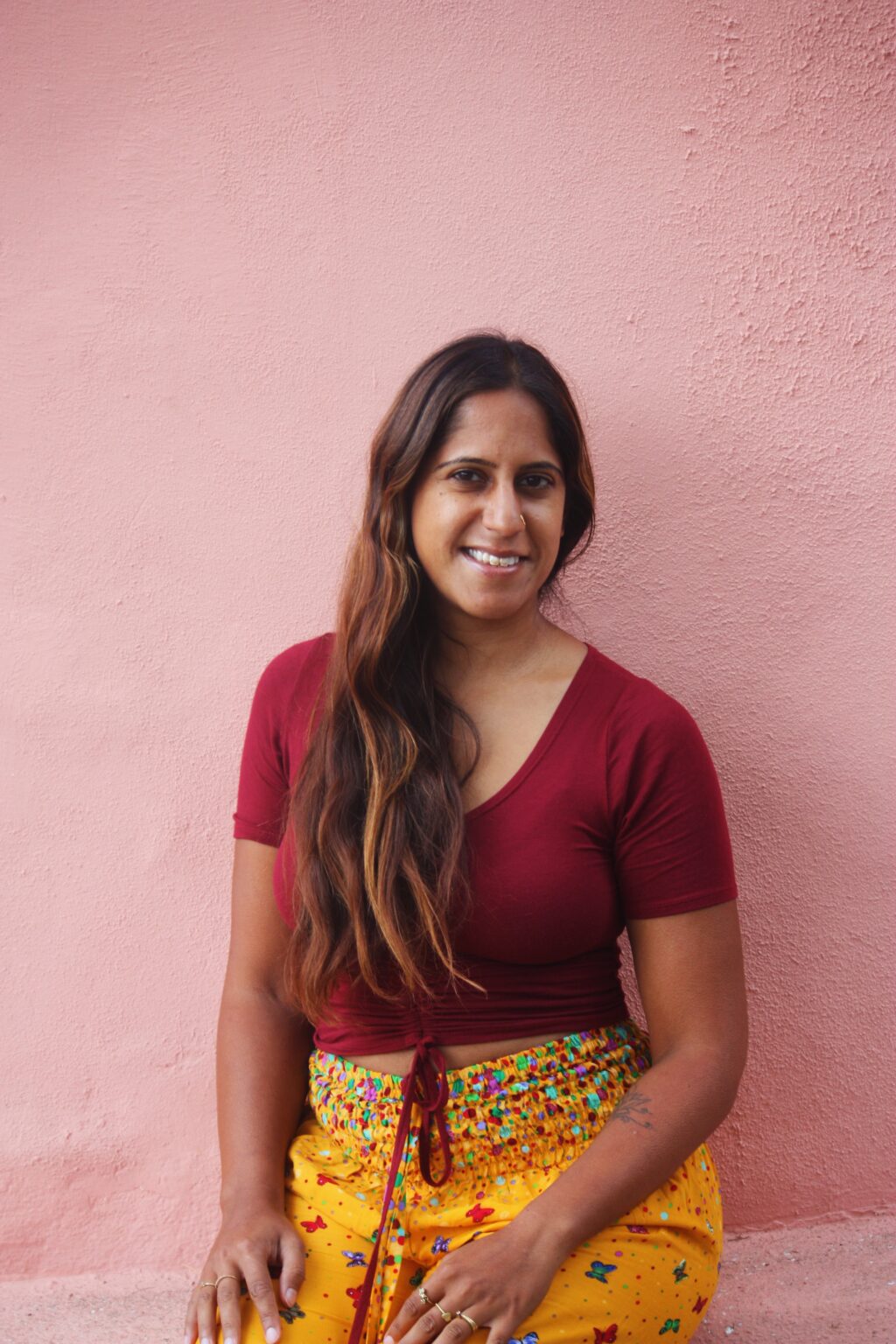
Firdose Moonda
E-RYT 500
Firdose is a South African of Indian descent, a yoga teacher, practitioner and researcher passionate about issues of decolonisation and social justice. She is currently undertaking doctoral work titled Yoga, Politics and Possibilities for Social Justice at the University of Cape Town. She holds a Masters degree on the Traditions of Yoga and Meditation from the School of Oriental and African Studies in London and she is a registered E-RYT 500 teacher with Yoga Alliance. She also works as the Southern African correspondent for ESPN, where she reports on cricket in South Africa, Zimbabwe, Namibia and beyond, and she is the women’s editor-at-large at On the Whistle, an African football podcast.
Her teaching style is steeped in historical knowledge, cultural experience, socio political curiosity and practical application. In her classes you can expect historical and philosophical discourse zoning in on particular periods in yoga’s storied development, anatomically intelligent postural practice which is also reflective of asana as it evolved over time and culturally relevant information on practices from the subcontinent which have evolved through a Western lens. She draws on a wide variety of sources including academic wisdom, teaching experience, and her own lived experience as a person of mixed heritage. She is both an African and an Indian and recognizes the shared suffering through colonization. Her work is centered on amplifying both Africa and India’s attempts to seek liberation – of their resources, their cultures and their bodies.
Frequently Asked Questions
Do I need to be enrolled in the Yoga Medicine 500-Hour Program to attend this Yoga Teacher Training?
No!
This yoga teacher training is designed for yoga teachers, physicians, healthcare providers and those who are interested in learning more about this invaluable curriculum. If you have a consistent yoga practice and a desire to learn more, then we would love to have you join!
If you are new to Yoga Medicine and would like to join the 500-hour program, then please complete the online application. Upon successful completion of this online training, the 12 hours would automatically be applied towards your 500-hour. Details on the 500-hour program can be found here.
How do I prepare for and access the online training?
When you register for this training, you will also receive complimentary access to the following online courses: Conducting a Therapeutic Evaluation and Recognizing Red Flags in a Therapeutic Yoga Setting – reviewing these courses will also help you prepare for this training.
After registering for this training, you will receive a confirmation email with more details on general information, training materials needed, and instructions on how to access your online training.
Do you offer refunds?
Immediately after your payment is processed, you will receive access to this live online training portal and materials. For this reason, refund requests are only accepted before November 5th (when this training goes live).
We appreciate your understanding.
Got additional questions? Contact us here.
Our Promise
We believe bridging the gap between yoga and medical systems is a crucial therapeutic adjunct to modern healthcare. That’s why all of our offerings strive to reach the same goal: to empower teachers and students through deeper yoga education.
We train our teachers to understand the body and the full spectrum of therapeutic yoga modalities so they can build a personalized practice to suit the individual across any yoga style, state of wellness, level, body shape, gender, anatomical differences, age, or capacity. With our credentials, students and healthcare facilities can trust that their yoga teacher is trained with a depth of knowledge in the fusion of research, science & traditional practices as well as a range of applied and highly specialized therapeutic experience!

Apply This Training Towards a 500-Hour Certification
If you are enrolled in Yoga Medicine’s 500-hour or 1000-hour program, then this training counts as 12 ‘in-person/contact’ hours towards your certification, as well as continuing education hours with Yoga Alliance!
If you are a yoga teacher interested in pursuing continued education with Yoga Medicine, then you have the option to apply to our 500-hour program (in which case, these teacher training hours will automatically apply towards your 500-hour certification process).
To learn more about our 500-hour certification program, click here.
 Login
Login