







Articles, In the Press, Internal Medicine, Rashmi Bismark, Resources, Yin, Restorative and Meditation, Yoga Medicine® News
Do You Really Need Another Meditation App? The Truth About Guided versus Silent Meditation Practice
By Rashmi Bismark for Yoga Medicine.
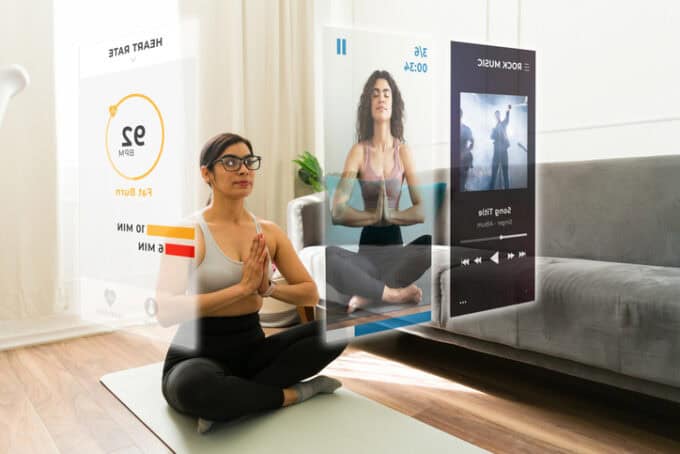
With the rise of interest in mindfulness and yoga, meditation has become more accessible than ever. There are endless apps, YouTube channels, podcasts, and streaming services offering guided practices. For many who are just starting to venture into a practice, an audio guide can feel like a lifeline. It offers a voice to help hold the silence, a guide to walk you through what to do, a coach to help you learn how to stay focused.
But do you actually have to meditate with an audio guide? In short, no, but there is value to both silent and guided meditation practice. Let’s explore their benefits and find ways to uncover a dynamic balance that works for you.
Benefits of Guided Meditation
Guided practices can provide much needed support for beginners and long-time practitioners alike. Sitting down in silence doesn’t always feel easy. If you’ve ever felt restless while trying to quietly rest, you are not alone. Having a voice to follow can help with structure and a sense of reassurance.
Sometimes the awareness of hearing a soothing voice can be a meditative anchor in itself. When the mind inevitably wanders, a guiding voice can help you bring attention back without judgement or getting entangled in the internal stories we might tell ourselves.
An audio guide also offers the potential for learning new techniques and gleaming insights. Whether it be a body scan, visualization, mantra, or open awareness meditation, an audio guide can introduce you to styles you might not have discovered on your own.
Guided practices tailored towards specific themes can also help you inquire into your own direct experiences and nurture supportive attitudes. For seasoned meditators, guided meditations can offer ways to refresh or reinvigorate a beloved practice.
Beauty of Silent Practice
One of the aspects of silent, self-guided meditation I treasure most is the way it nourishes connections to inner trust and self-reliance. Sitting in silence and taking responsibility for your own practice helps you learn to listen and lean into your own awareness. Instead of waiting for someone else’s cues, it creates room to reveal innate wisdom and natural ways of responding skillfully to inner challenges.
Without external prompts, you may notice subtle sensations, flows of emotion, insight, or inner stillness more clearly. There is a depth of presence that you can attend to with awareness.
And when silent stillness expands into a sense of spaciousness, a freedom can emerge. No devices, headphones, fancy wearables, or apps. Just you, your presence and aliveness.
Finding Your Personal Balance
The truth? Guided versus silent meditation isn’t an either/or decision. Many practitioners and teachers, myself included, often weave the two together. The next time you choose to practice, check in with yourself. Notice what you feel drawn to. Allow your practice to adapt to meet your needs.
Want to explore silence a bit more? Weave in 2-3 minutes of silent, self-guided practice at the end of an audio guided meditation. Notice how you may be able to extend the quiet as stillness begins to feel more comfortable.
Sometimes a silent practice just makes more sense such as during a period of mindful walking or a spontaneous mini-practice in the midst of the day. In moments of added stress, a guided meditation or practicing with background music might feel more restful. You could also explore creating a rhythm of alternate days: guided one day and silent, self-guided the next.
While audio guided meditation can be a wonderful tool for deepening understanding, meditation expands when you also learn to be with yourself in silence. Try both, notice how you feel, and let your relationship with meditation evolve naturally. Savor making your practice your own.
***
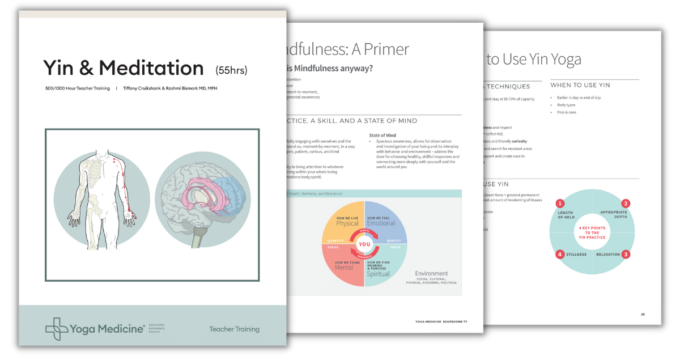
JOIN US FOR THE ONLINE YIN & MEDITATION TRAINING!
Yin & Meditation Yoga Teacher Training | Online
 Login
Login